
Home -> Products -> Pulsation Damper/Surge Suppressor/Accumulator

Uses specially formulated, high-tensile elastomeric bladders to cushion velocity shifts and suppress line surges.

Engineered and manufactured in strict compliance with international pressure vessel codes (ASME, EN 13121).

Every vessel and internal bladder is rigorously hydrostatic/pneumatically tested to 2X rated working pressure.

Available with certified food-grade rubber bladders suitable for municipal drinking water and desalination lines.
As a leading manufacturer of Surge Suppression Vessels, Shalin Composites India Pvt. Ltd. offers indigenously developed bladder-type pressure vessels engineered to absorb hydraulic transients, protect high-flow pipelines, and prevent catastrophic water hammer failures.
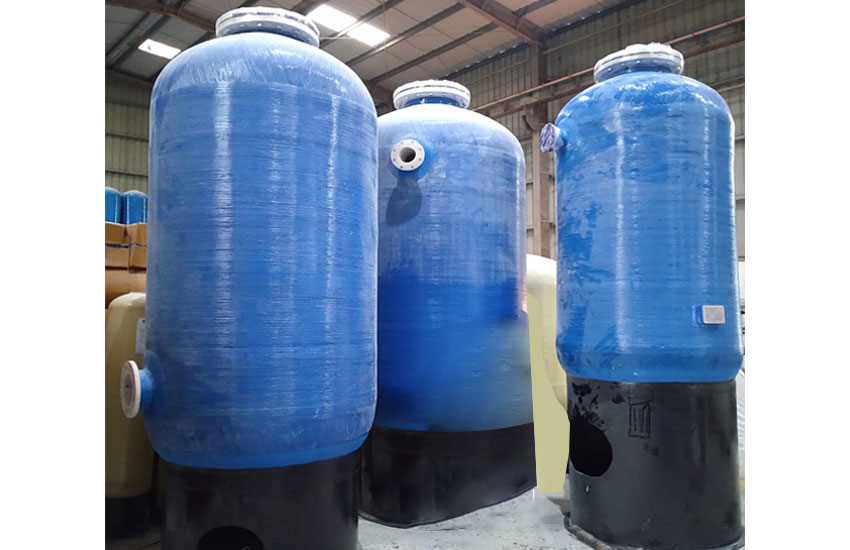
Vessels available in Mild Steel (MS), Stainless Steel (SS), and Fibre Reinforced Plastic (FRP) to match fluid requirements.
Fitted with a protective inlet nozzle screen to prevent sharp debris or solids from entering the vessel and damaging the bladder.
Bladders manufactured from specially formulated rubber offering high tensile strength, high elongation, and low compression set.
Custom engineered for exact volume capacities, operating pressure ratings, and fluid chemical compatibility.
Exact replacement bladders can be supplied in the future using precise vessel identification numbers and specifications.
Technical assistance provided to calculate line hydraulics and select the exact required vessel capacity.
Pre-charged with compressed air or gas, acting as a dynamic pneumatic spring during pressure fluctuations.
Fluid remains contained within or around the bladder, preventing external air entrainment into the main pipeline.
The vessel fills with pipeline fluid during standard pumping operations. The pre-charged elastomeric bladder remains inflated and partially compressed by normal line pressure.
When a valve closes or a pump stalls, a high-pressure transient wave enters the vessel through the inlet nozzle screen.
The sudden pressure surge compresses the internal gas-charged bladder. The bladder contracts and expands continuously, absorbing destructive kinetic energy.
Hydraulic energy is safely stored as pneumatic pressure, stabilizing line pressure and protecting pipe joints and weak points from rupture.
